
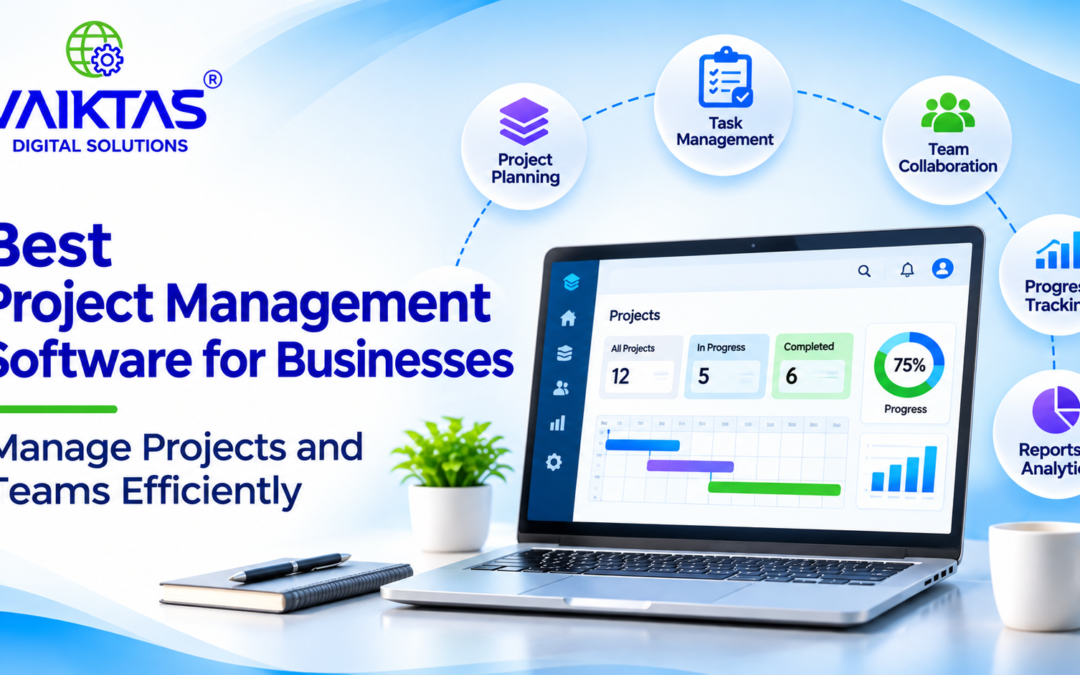
Best Project Management Software for Businesses: Manage Projects and Teams Efficiently
Introduction
Managing multiple projects, assigning tasks, monitoring deadlines, and coordinating employees can be challenging for growing businesses. Without an organised system, companies may experience communication gaps, delayed projects, missed deadlines, and reduced productivity.
Choosing the right project management software in Chennai can help businesses streamline daily operations, improve team collaboration, and monitor project activities through a centralised platform.
Whether you manage a digital marketing agency, IT company, construction business, or growing enterprise, an effective project management solution can help your team stay organised and complete projects efficiently.
What Is Project Management Software?
Project management software is a digital solution that helps businesses plan, organise, assign, monitor, and manage projects from beginning to completion.
Instead of depending on spreadsheets, emails, and manual updates, businesses can use a centralised platform to manage daily project activities.
A project management system typically helps teams:
- Create and organise projects.
- Assign tasks to team members.
- Set deadlines and track progress.
- Monitor project completion.
- Improve communication and collaboration.
- Manage workloads and responsibilities.
- Generate reports to evaluate performance.
By bringing these activities into one system, businesses can improve operational efficiency and maintain better control over their projects.
Why Do Businesses Need Project Management Tools?
As businesses grow, managing projects manually becomes increasingly complicated. Multiple employees may work on different tasks, and managers need a clear understanding of project progress.
Here are some important reasons why businesses should adopt digital project management tools.
1. Better Task Management
Managing daily responsibilities becomes easier when every task is properly organised and assigned.
Task management systems allow managers to create tasks, assign responsibilities, set priorities, and monitor completion status.
This ensures that employees understand their responsibilities and focus on the right activities.
2. Improved Team Collaboration
Effective collaboration is essential for successful project execution.
When team members work from different locations or departments, communication gaps can affect productivity.
A centralised platform helps teams stay connected, share updates, coordinate activities, and work towards common objectives.
3. Real-Time Project Tracking
Knowing the current status of every project helps managers make better decisions.
Project tracking features provide visibility into completed tasks, pending activities, ongoing work, and upcoming deadlines.
This allows businesses to identify delays early and take corrective action.
4. Efficient Deadline Management
Missed deadlines can affect customer satisfaction and business performance.
Digital planning tools help managers set task deadlines, monitor progress, and identify overdue activities.
This helps teams prioritise important work and maintain project schedules.
5. Increased Business Productivity
When project information, task assignments, and progress updates are available in one place, employees spend less time searching for information.
This reduces unnecessary coordination and allows teams to concentrate on completing their work.
Essential Features to Look for in Project Management Software
Before selecting a project management platform, businesses should understand the features that support their operational requirements.
Project Creation and Planning
A good platform should allow businesses to create projects, define objectives, organise activities, and establish project timelines.
Task Assignment
Managers should be able to assign tasks to employees, define responsibilities, set priorities, and monitor completion status.
Deadline Tracking
Deadline management helps businesses organise schedules, identify overdue tasks, and ensure that important activities are completed on time.
Progress Monitoring
Project progress tracking allows managers to understand completed activities, ongoing work, and pending tasks.
Team Collaboration
Collaboration capabilities help employees coordinate their activities, share updates, and work together more effectively.
Reports and Analytics
Reporting tools provide insights into project progress, task completion, and overall performance, supporting better business decisions.
User Management
User management capabilities help administrators organise employee accounts, responsibilities, and access permissions.
How Project Management Tools Help Different Industries
Digital project management solutions are useful across different industries and business sizes.
Digital Marketing Agencies
Marketing agencies can organise SEO campaigns, social media activities, content creation, advertising campaigns, and client deliverables.
IT and Software Development Companies
Development teams can coordinate technical tasks, monitor project milestones, manage testing activities, and track delivery schedules.
Construction Companies
Construction businesses can organise project activities, coordinate teams, monitor work progress, and manage important deadlines.
Creative and Design Agencies
Creative teams can manage design assignments, client projects, creative workflows, and delivery schedules.
Small and Medium Businesses
Growing businesses can organize internal operations, manage employee responsibilities, coordinate departments, and improve accountability.
Benefits of Cloud-Based Project Management Solutions
Cloud-based platforms allow businesses to access project information through an internet-connected system.
Some important advantages include:
- Access project information from different locations.
- Improve coordination between remote and office-based teams.
- Keep project information centralised.
- Reduce dependence on manual spreadsheets.
- Support flexible business operations.
- Simplify project updates and monitoring.
- Improve communication between departments.
These benefits make cloud-based solutions a practical choice for modern businesses.
How to Choose the Right Project Management Solution
Selecting the right platform is important for achieving better project outcomes.
Consider these factors before making a decision:
1. Understand Your Business Requirements
Identify whether your organisation needs task assignment, project tracking, team collaboration, reporting, or a combination of these capabilities.
2. Choose an Easy-to-Use Platform
Select a solution with a simple interface that employees can understand and use without complicated training.
3. Evaluate Tracking Capabilities
Ensure the platform provides sufficient visibility into project progress, deadlines, and task completion.
4. Check Collaboration Features
Choose a system that supports effective communication and coordination between team members.
5. Review Pricing and Scalability
Compare subscription costs, available features, user limits, and the ability to support future business growth.
6. Consider Security and Support
Evaluate user permissions, data protection measures, backup arrangements, and technical support availability.
Common Project Management Challenges and How to Overcome Them
Even experienced businesses face challenges when managing multiple projects simultaneously.
Here are some common problems and practical ways to address them.
Unclear Responsibilities: Assign specific tasks and responsibilities to individual team members.
Missed Deadlines: Establish realistic timelines and monitor upcoming and overdue activities.
Communication Gaps: Maintain centralised project updates so employees can access relevant information.
Limited Project Visibility: Use progress monitoring tools to understand the status of ongoing activities.
Poor Workload Management: Distribute tasks according to employee responsibilities and available capacity.
Manual Tracking Issues: Replace scattered spreadsheets and updates with an organised digital workflow.
Addressing these challenges can improve coordination and support more consistent project execution.
Conclusion
Successful project management requires proper planning, clear responsibilities, effective communication, and continuous progress monitoring.
Implementing the right digital solution can help businesses reduce operational challenges, improve team productivity, manage deadlines, and achieve project goals more efficiently.
Whether you operate a small business, marketing agency, IT company, or growing enterprise, choosing a suitable platform can make a significant difference in how your teams organise and complete their work.
Investing in an organised project management system is an important step towards improving teamwork, maintaining project visibility, and achieving long-term business growth.