
Every successful business depends on understanding its workforce. As organisations grow, knowing how employees work, how teams are structured, and how HR activities progress becomes increasingly valuable.
This is where HRMS reports play an important role. They turn organised employee information into useful insights that can support better workforce planning and everyday business decisions.
Modern human resource management systems help businesses maintain employee records, manage attendance information, organise leave requests, and access relevant workforce data. With suitable reporting features, HR managers can understand important trends and plan more effectively.
In this article, we explore seven valuable workforce insights that businesses can gain from HRMS reporting and how these insights contribute to smarter HR management.
What Are HRMS Reports?
HRMS reports are structured summaries of workforce information generated from data maintained within a human resource management system.
Depending on the software, these reports may include employee headcount, attendance records, leave information, departmental distribution, and other workforce-related details.
The primary purpose of HRMS reporting is to help authorised HR professionals access relevant information in a clear and organised format.
Instead of viewing workforce information as individual records alone, organisations can use reports to identify patterns, monitor activities, and support planning.
More importantly, HRMS reporting helps businesses connect everyday employee information with broader organisational goals.
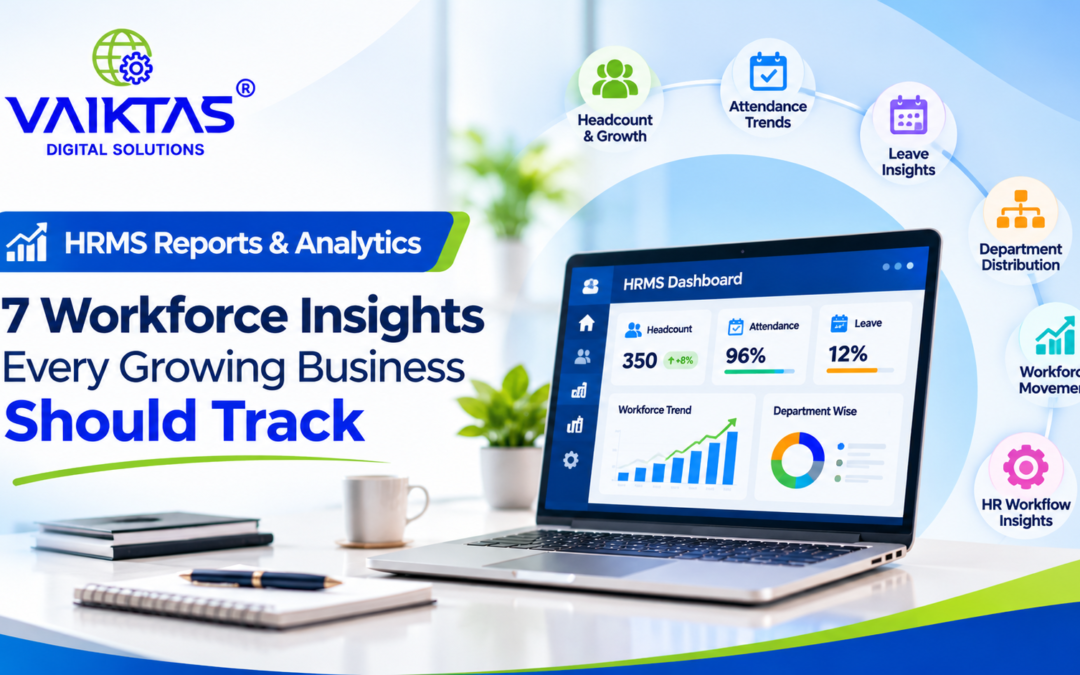
1. Employee Headcount and Workforce Growth
Understanding the size and structure of a workforce is essential for business planning.
Employee headcount reports provide information about the number of employees within an organisation.
Depending on the available data, businesses may also review employee distribution across departments, teams, or employment categories.
How Headcount Reports Support Planning
These reports can help HR managers understand how the workforce changes over time.
For example, a growing organisation may review employee numbers before expanding a department or introducing new services.
Headcount information can also support workforce budgeting, recruitment planning, and resource allocation.
By maintaining an accurate overview of employee numbers, businesses can align workforce requirements with operational objectives.
2. Attendance Trends and Workforce Consistency
Employee attendance information provides valuable insights into daily workforce activity.
Attendance reports help organisations review work presence and identify relevant attendance patterns.
However, attendance information should be interpreted carefully because different roles, schedules, and working arrangements may affect the results.
How Attendance Reports Help HR Teams
Businesses can use attendance summaries to review workforce availability and support routine administrative planning.
For example, managers may examine attendance patterns when organising team schedules or planning operational coverage.
Organised attendance information also helps HR teams maintain consistent employee records.
With the right reporting approach, businesses can use attendance data to support workforce coordination while respecting employee privacy.
3. Employee Leave Trends and Availability Planning
Employee leave is an important part of workforce management.
Organisations need clear information about approved leave, upcoming absences, and employee availability to coordinate business activities.
Leave reports can provide structured information that supports this planning.
Understanding Leave Patterns
When supported by the software, HR teams can review leave balances, approved requests, and leave trends across selected periods.
For instance, managers may use upcoming leave information to coordinate project schedules or ensure appropriate staffing.
Leave information can also help HR teams communicate relevant policies and maintain consistent administrative practices.
The purpose of leave reporting is not to discourage employees from taking time off. Instead, it supports responsible workforce planning and helps businesses respect employee leave entitlements.
4. Department-Wise Workforce Distribution
As businesses expand, departments often develop different responsibilities and staffing requirements.
Understanding how employees are distributed across teams helps organisations maintain balanced operations and plan future resources.
Businesses evaluating HRMS software in Chennai can consider whether its reporting capabilities provide the workforce visibility required for their department structures and business goals.
Why Department-Level Insights Matter
Department-wise employee reports can help managers understand the number of employees assigned to different business functions.
For example, an organisation may review workforce distribution across sales, operations, customer service, and administration.
These insights can support discussions about team capacity, organisational structure, and future recruitment requirements.
However, employee counts alone do not determine whether a department has enough resources. Workload, skills, responsibilities, and business objectives must also be considered.
A balanced approach to workforce analysis helps organisations make more informed staffing decisions.
5. Employee Information and Record Accuracy
Reliable employee information is essential for effective HR operations.
Employee records contain details that support communication, administration, and workforce coordination.
HRMS reporting can help organisations review available employee information and identify records requiring updates.
How Employee Record Reports Add Value
Depending on the system, HR teams may review employee directories, employment details, and other relevant workforce information.
Regular data reviews help maintain consistency and improve information reliability.
Accurate records are especially useful when organisations experience workforce changes, departmental restructuring, or business expansion.
Businesses should also establish appropriate access permissions and data retention practices to protect employee information.
When maintained responsibly, centralised employee data can support more organised HR administration.
6. Workforce Movement and Employee Retention Insights
Understanding how the workforce changes over time is valuable for long-term business planning.
Workforce movement may include new employees joining, employees changing departments, or individuals leaving the organisation.
Where supported, HRMS reports can help businesses review these changes and maintain an organised workforce history.
How Workforce Movement Reports Support Decisions
For example, HR managers may compare employee headcount across different periods to understand workforce growth.
Organisations with relevant joining and exit records can also evaluate employee turnover trends.
These insights can support discussions about recruitment requirements, employee retention strategies, and workforce stability.
However, workforce movement data should be considered alongside employee feedback, business conditions, and organisational changes.
Using multiple sources of information provides a more complete understanding of workforce trends.
7. HR Workflow and Administrative Activity Insights
HR teams coordinate numerous activities throughout the employee lifecycle.
These may include maintaining records, reviewing leave requests, updating employee information, and managing administrative approvals.
Some HRMS platforms offer reports or workflow summaries that help managers review these activities.
How Workflow Insights Support HR Efficiency
When the necessary data is available, businesses can monitor administrative requests, approval status, and activity progress.
For example, reviewing leave request status can help HR teams understand how routine approvals are progressing.
Such information may support process improvements, clearer responsibilities, and better administrative coordination.
Additionally, consistent reporting can help organisations evaluate whether existing workflows continue to meet their requirements as the business grows.
How to Use HRMS Reports for Better Business Decisions
Collecting workforce information is only the first step. The real value comes from understanding the data and using it responsibly.
Organisations should identify which workforce indicators are relevant to their goals before generating reports.
For example, a business planning expansion may prioritise headcount and departmental distribution. Meanwhile, a company coordinating seasonal operations may focus on attendance and leave availability.
HR teams should review reports at appropriate intervals and discuss relevant findings with authorised managers.
Importantly, reports should provide context rather than become the sole basis for employee-related decisions.
Combining reliable data with professional judgement and workplace communication creates a more balanced approach to workforce management.
Best Practices for Effective HRMS Reporting
Businesses can improve the usefulness of HRMS reports by establishing clear data management and reporting procedures.
Important practices include:
- Maintain accurate information: Update employee records regularly to keep reporting data reliable.
- Choose relevant metrics: Focus on workforce information that supports actual business objectives.
- Protect employee privacy: Restrict access to sensitive records and follow applicable data protection requirements.
- Review reports consistently: Use suitable reporting intervals to understand workforce changes.
- Interpret information carefully: Consider business context before drawing conclusions from workforce data.
- Encourage responsible decision-making: Use reports to support employees and organisational planning.
These practices help businesses turn workforce information into meaningful operational insights.
Conclusion
Understanding workforce information is an important part of building an organized and successful business.
From employee headcount and attendance trends to departmental distribution and workforce planning, HRMS reports provide valuable insights that support informed HR management.
When organizations maintain accurate data and use reporting features responsibly, they can improve workforce visibility, coordinate activities, and prepare for future requirements.
Ultimately, effective HR reporting is about more than viewing numbers. It is about understanding people, supporting better decisions, and building a stronger foundation for sustainable business growth.
Better workforce insights create opportunities for smarter planning and more connected business operations.