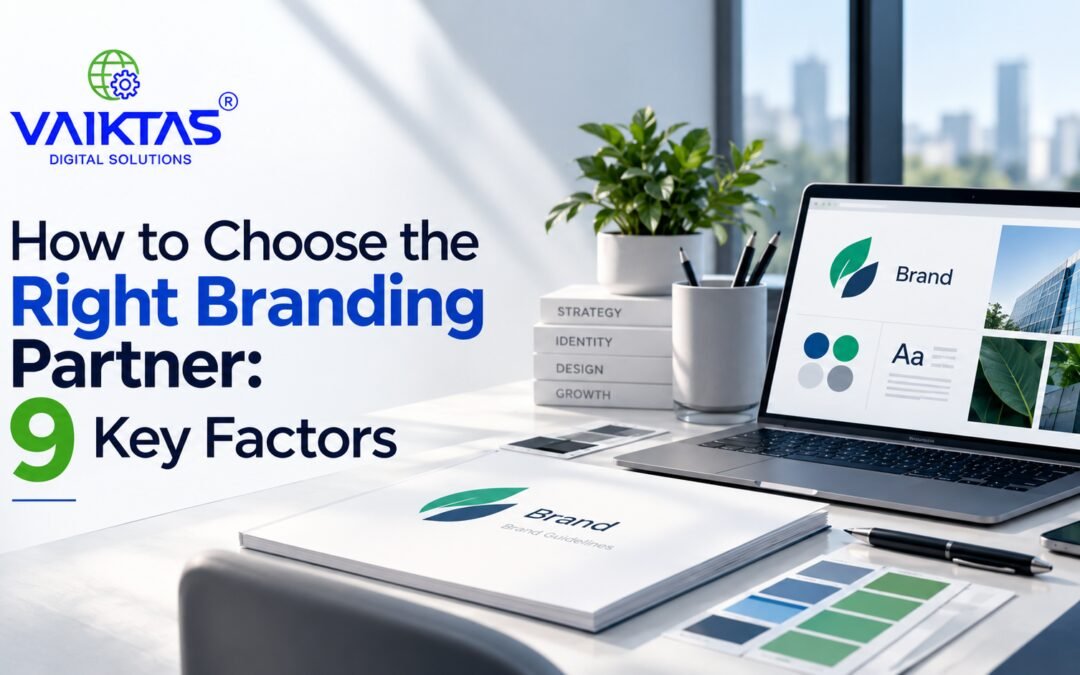
Choosing the right branding partner is an important decision for any business that wants to establish a strong market presence. A brand is more than a logo, a colour palette, or an attractive website. It represents how customers recognise a business, understand its values, and decide whether to trust its products or services.
With businesses competing across digital platforms and traditional markets, having a consistent and recognisable identity has become increasingly important. However, selecting the right creative partner requires more than browsing design portfolios and comparing visual styles. Businesses should also evaluate strategic thinking, industry understanding, communication, and the ability to translate business goals into a meaningful brand identity.
Understanding these factors can help businesses choose a branding partner that supports long-term growth rather than simply delivering attractive designs.
1. Evaluate the Agency’s Approach to Brand Strategy
Before discussing colours, typography, or logo concepts, a professional branding team should understand your business. This includes your target audience, market position, competitors, products or services, and long-term objectives.
A well-defined brand strategy establishes the foundation for every visual and communication decision. Without it, branding can become inconsistent or fail to communicate what makes a business different.
When evaluating an agency, consider whether it asks questions such as:
- Who are your ideal customers?
- What makes your business different from competitors?
- What problems do your products or services solve?
- How should customers perceive your brand?
- What business objectives should the branding support?
A creative partner that explores these questions before beginning design work is more likely to develop an identity aligned with your business goals.
2. Look Beyond Attractive Portfolio Designs
A visually impressive portfolio can demonstrate an agency’s creative capabilities, but it does not necessarily reveal how effectively the agency solves business problems.
Instead of evaluating projects based only on their appearance, examine the reasoning behind each design. Look for evidence that the agency understands different audiences, adapts its approach to different industries, and creates identities that communicate a clear message.
Ask potential partners to explain the objectives behind selected projects, the challenges they addressed, and how their creative decisions supported the client’s positioning.
You should also examine whether the agency can work across different brand styles rather than applying the same visual approach to every client.
The goal is to find a creative partner that can develop a distinctive identity for your business, not simply reproduce a design trend.
3. Understand the Local Market and Your Audience
Local market awareness can be valuable when choosing a branding partner. Chennai has businesses across technology, manufacturing, healthcare, education, retail, hospitality, professional services, and many other sectors. Each category may have different customer expectations and competitive challenges.
A creative partner should understand the audience your business wants to reach and how your brand can differentiate itself in its specific market.
For example, a technology company may need a brand identity that communicates innovation and reliability, while a neighbourhood retail business may prioritise familiarity, accessibility, and customer trust.
Local understanding can also help businesses consider language preferences, cultural context, regional customer behaviour, and the differences between serving local customers and reaching a wider audience.
However, location alone does not guarantee market expertise. Ask how the agency researches your audience and develops positioning based on your particular business needs.
4. Check Whether It Offers a Complete Brand Identity System
A brand needs to remain recognisable across multiple touchpoints. A logo that looks excellent on a presentation slide may not communicate effectively when used on a mobile screen, product package, social media profile, or printed advertisement.
This is why businesses should evaluate the agency’s ability to develop a complete brand identity system.
Depending on your requirements, this may include:
- Logo design and variations
- Brand colours and typography
- Visual guidelines and brand usage rules
- Brand messaging and tone of voice
- Social media design guidelines
- Business stationery and marketing collateral
- Website visual direction
- Packaging or signage design, where relevant
A comprehensive identity system helps maintain consistency as your business grows and expands into new communication channels.
Before signing an agreement, clarify which deliverables are included, how many revisions are available, and whether the agency will provide editable files and brand guidelines.
5. Evaluate Digital Branding Capabilities
Customers often encounter a business online before contacting its team or visiting its premises. Its website, social media profiles, search listings, and digital advertisements can all influence the first impression.
Consequently, branding should extend beyond printed materials and remain consistent across digital platforms.
When assessing a creative partner, determine whether it understands how brand identity works alongside website design, user experience, content, and digital marketing.
For example, a consistent visual identity across a website and social media profiles can make a business easier to recognise. Clear messaging can help visitors understand what the business offers, while a well-structured website can guide them towards making an enquiry.
Branding does not automatically guarantee more leads or higher sales. However, a clear and consistent identity can support customer understanding and help create a more cohesive digital experience.
Businesses planning to invest in digital growth should therefore consider whether their branding partner can coordinate visual identity with their broader online presence.
6. Assess Communication and the Creative Process
Branding projects require collaboration between the business and the creative team. Even a capable agency may struggle to deliver the right outcome if expectations, feedback, and responsibilities are unclear.
Before making a decision, understand how the agency manages its projects.
Consider asking:
- Who will be your main point of contact?
- How will research and initial concepts be presented?
- How are feedback and revisions handled?
- What is the expected project timeline?
- How will approvals and final delivery be managed?
A structured process makes it easier to track progress, resolve disagreements, and ensure that the final identity reflects the agreed objectives.
Good communication is particularly important when branding involves several decision-makers or multiple deliverables, such as a logo, website, marketing materials, and packaging.
7. Compare Pricing Based on Scope and Value
Branding costs can vary considerably depending on the agency’s experience, research process, creative requirements, and project scope. Choosing the lowest quotation may appear economical, but it can lead to additional expenses if essential deliverables are excluded.
Rather than comparing prices alone, review what each proposal includes.
A useful comparison should cover:
- Research and brand strategy
- Number of concepts and revision rounds
- Final design files and ownership terms
- Brand guidelines and supporting assets
- Additional design or implementation charges
- Project schedule and payment milestones
Ask for a written proposal that clearly defines the scope of work. Confirm intellectual property ownership, usage rights, and any ongoing fees before approving the project.
The right choice is not necessarily the most expensive agency. It is the partner whose approach, capabilities, and deliverables match your business requirements and budget.
8. Look for Evidence of Reliability and Results
Client testimonials, case studies, references, and repeat business can provide useful information about an agency’s working style and reliability.
However, businesses should distinguish between attractive presentations and verifiable evidence. Ask for relevant examples of completed work and, where possible, learn how the client evaluated the outcome.
Depending on the project, useful indicators may include improved brand consistency, stronger customer recognition, clearer market positioning, or better alignment between marketing materials and business objectives.
Not every branding project has a directly measurable financial outcome, and results can depend on several factors beyond design. A trustworthy agency should explain its contribution realistically instead of promising guaranteed rankings, leads, or sales.
9. Ask About Support After the Branding Project
A brand identity is not always a one-time project. Businesses may later need new campaign assets, updated guidelines, additional website pages, packaging variations, or creative materials for new services.
Understanding the agency’s post-project support can help you plan for future requirements.
Ask whether it provides ongoing design assistance, brand guideline updates, additional creative services, or support when the business expands into new markets.
You should also confirm that your team will receive the files and documentation needed to use the identity consistently without depending on the agency for every small change.
A branding partner that can accommodate future needs may provide greater continuity as your business develops.
Common Mistakes to Avoid When Choosing a Branding Partner
Even businesses that understand the importance of branding can make avoidable mistakes during the selection process.
Choosing based only on price: A low quotation may exclude strategy, brand guidelines, or important deliverables.
Selecting a team solely for its logo designs: Strong visual work matters, but brand positioning and consistency matter too.
Ignoring communication: Unclear responsibilities and revision processes can delay a project.
Overlooking digital applications: Your brand should work across the platforms your customers actually use.
Expecting instant results: Branding helps establish recognition and positioning over time; it does not guarantee immediate business growth.
Failing to clarify ownership: Always confirm the rights, formats, and files included in the final delivery.
Avoiding these mistakes can make the selection process more transparent and help you establish a productive relationship with your creative partner.
Conclusion: Choose a Branding Partner That Understands Your Business
Selecting the right branding partner involves more than finding a team that creates attractive designs. Businesses should evaluate strategic thinking, market knowledge, creative capabilities, communication, pricing transparency, and long-term support before making a decision.
For businesses in Chennai, a strong brand identity can help communicate value, build customer trust, and create a consistent presence across digital and offline platforms. By comparing proposals, reviewing relevant case studies, and understanding the complete scope of work, businesses can make a more informed choice.
Ultimately, investing in the right branding strategy can help your business establish a distinctive identity and build a stronger foundation for future growth. If you want to develop a recognizable and professional brand, partnering with the right branding agency in Chennai can be an important step.